Archive for February, 2010

Sketches of Spain: El Croquis

Friday, February 26th, 2010

spacer
We have just received a pair of new issues of the beautiful El Croquis from Madrid.

El Croquis 147 – Toyo Ito, 2005 – 2009

El Croquis 148 – Collective Experiments

✍ 1982 (2010): Fernando Márquez Cecilia & Richard Levene

Founded in 1982, El Croquis (‘the Sketch’ in Spanish) is consistently the most beautiful architectural periodical published anywhere in the world. With editorial in both Spanish and English, El Croquis examines the work of the world’s notable architects in an ongoing series of beautifully designed, bimonthly hardcover monographs. Unique to the publication is the comprehensive manner in which each architect’s projects are documented, with plans, sketches, and insights into all aspects of the design process. It is this level of detail, coupled with Hisao Suzuki’s gorgeous photography, that has made El Croquis BUILT’s most requested publication – despite the somewhat painful price.

In addition to the current issue, we will be stocking some of El Croquis’ most popular back issues including those on Rem Koolhaas and OMA, Herzog & de Meuron, Steven Holl, and Tadao Ando.

spacerspacer

spacerspacer134_135

spacerreed_sanaaspacer

spacerspacerreed_ando1

El Croquis 20/64/98 – Rafael Moneo, 1967 – 2004: $219.95
El Croquis 44/58 – Tadao Ando, 1983 – 2000: $149.95
El Croquis 52/73/103 – Zaha Hadid, 1983 – 2004: $179.95
El Croquis 78/93/108 – Steven Holl, 1986 – 2003: $179.95
El Croquis 86/111 – MVRDV, 1991 – 2002: $149.95
El Croquis 87/120 – David Chipperfield, 1991 – 2006: $179.95
El Croquis 109/110 – Herzog & de Meuron, 1997 – 2002: $129.95
El Croquis 123 – Toyo Ito, 2001- 2005: $99.95
El Croquis 129/130 – Herzog & de Meuron, 2000 – 2006: $129.95
El Croquis 131/132 – OMA/Rem Koolhaas Volume 1: $149.95
El Croquis 134/135 – OMA/Rem Koolhaas Volume II: $149.95
El Croquis 139 – SANAA/Sejima Nishizawa, 2004 – 2007: $129.95
El Croquis 141 – Steven Holl Architects: $99.95
El Croquis 143 – Gigon / Guyer, 2001 – 2008: $99.95
El Croquis 144 – EMBT Enrique Miralles / Benedetta Tagliabue, 2000-2009: $99.95
El Croquis 145 – Christian Kerez, 2000-2009: $99.95
El Croquis 146 – Souto De Moura, 2005-2009: $99.95
El Croquis 147 – Toyo Ito, 2005-2009: $99.95
El Croquis 148 – Collective Experiments: $99.95

_________________________________

To purchase any of the products or titles mentioned here, please visit our downtown Toronto location, call us toll-free at 1-800-56-swipe or e-mail us at: info@swipe.com.

2G : International Architecture Review from Barcelona (As Opposed to 2G, Gary Glitter’s Third Studio Album)

Thursday, February 25th, 2010

Launched in 1997, 2G International Architecture Review, from Barcelona-based Editorial Gustavo Gili, has, in the short time since its introduction, become the most respected chronicle of contemporary architecture. Each issue is divided into three sections. The first two offer a critical examination of the work of a single architect, beginning with an introductory essay by renowned critics and colleagues, and followed by an in-depth presentation of 10 to 15 representative projects documented with full-page photographs and detailed plans and elevations. The final section, called Nexus, provides the featured architect an opportunity to write about their own work and to present their ideas as they see fit. Thus, 2G offers a unique opportunity to contrast the architect’s stated intent with critical interpretations of their work.

spacerspacer

2G #52: Sauerbruch Hutton
✍ 2010: Barry Bergdoll, Louisa Hutton, Matthias Sauerbruch & Philip Ursprung

Dividing their time between London and Berlin, Matthias Sauerbruch and Louisa Hutton are known for a practice that eschews the straight line and a muted palette, designing curvaceous buildings with bold, bright colours. (2010: Editorial Gustavo Gili; ISBN 9788425223365)

$59.95

2gmgmspacer 9788425222931_04_mspacer9788425221880_04_m

2G #51: MGM Morales Giles Mariscal
✍ 2009: Laurent Beaudouin, Sara de Giles, Jose Morales & Carlos Muro

This issue examines the work of another iconoclastic regional practice: in this case the Sevillean studio MGM Arquitectos. In both their high-density residential projects and public buildings, MGM infuses a distinctly contemporary architecture with the traditional interplay of interior and exterior space typical of Andalusian architecture. (2009: Editorial Gustavo Gili; ISBN 9788425223143)

$59.95

2G #50: Sou Fujimoto
✍ 2009: Toyo Ito & Julian Worrall

Sou Fujimoto is the most representative practitioner of a distinctively Japanese style in contemporary architecture which incorporates traditional Japanese attitudes toward nature and the relationship between interior and exterior space. Fujimoto is one of the youngest architects to be profiled in 2G, and his work has been restricted primarily to smaller residential projects and a variety of conceptual exercises. The issue features a critical assessment by renowned Japanese architect Toyo Ito, in many ways Fujimoto’s conceptual antecedent. (2009: Editorial Gustavo Gili; ISBN 9788425222931)

$59.95

2G #48–49: Mies van der Rohe : Houses
✍ 2009: Beatriz Colomina, Moises Puente & Hans Christian

This double issue focuses an aspect of Mies’ body of work that, up to now, has been poorly documented. All of Mies’ single-family dwellings, in both Germany and the United States, are examined in new commissioned photos from Hans-Christian Schink, along with the original drawings and other archival material. Essays by Beatriz Colomina and Moises Puente provide critical context and a special section catalogues the known unbuilt residential projects. (2009: Editorial Gustavo Gili; ISBN 9788425221880)

$129.95

_________________________________

To purchase any of the products or titles mentioned here, please visit our downtown Toronto location, call us toll-free at 1-800-56-swipe or e-mail us at: info@swipe.com.

The Typographic Grid: Essential Framework or Elegant Prison?

Wednesday, February 24th, 2010

The layout grid, in its modern conception, has its origins with a group of Swiss graphic designers and educators working in the early postwar era. Ironically, while the grid was intended to create a modern system of layout flexible enough to accommodate type and image together, and to organize more complex textual hierarchies, it is firmly grounded in the structure and limitations of metal type composition. It could be argued that the enduring success of the ‘International Typographic Style’, as the methods of the Zürich and Basel Schools came to be known, has as much to do with the conventionalized visual vocabulary the typographic grid has imposed on Twentieth-Century publication design as with any inherent superiority of the approach.

In common with another mainstay of the International Typographic Style, the typeface Helvetica, the popularity of the grid approach has followed something of a typical pendulum motion, wherein a once-revolutionary idea becomes mainstream, spawns a backlash, only to be rediscovered by a new generation and readopted with uncritical reverence. For anyone who has been working as a graphic designer for more than a decade, the grid carries unfortunate associations with corporate culture – the graphic equivalent to the ubiquitous office cubicle. And as such, the sight of a psychedelic rave poster that appears to have been designed by Max Bill is simultaneously amusing and vaguely disturbing.

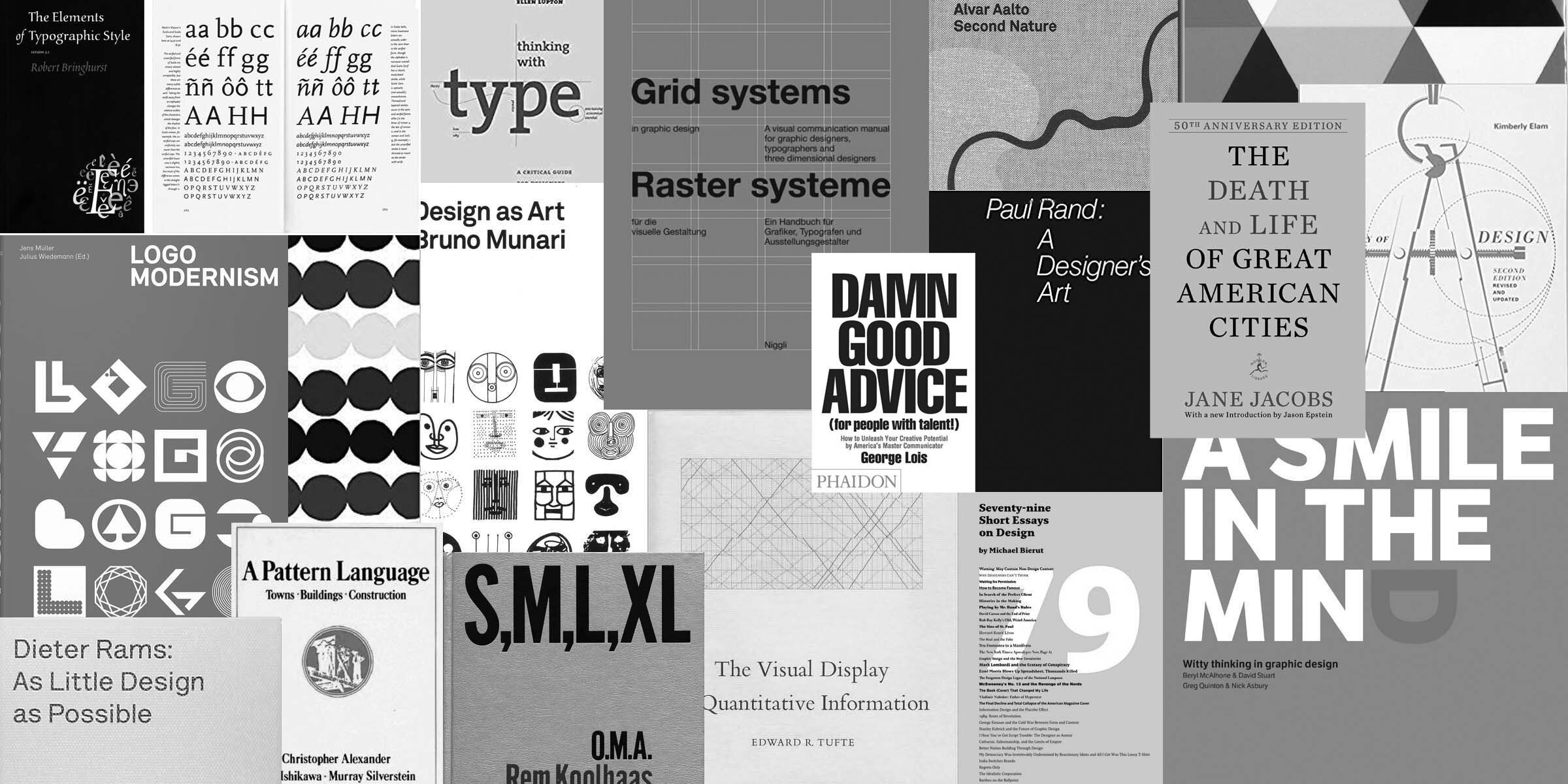
Grid Systems in Graphic Design / Raster Systeme für die Visuele Gestaltung, 4th Edition
✍ 1961 (1996): Josef Müller-Brockmann

Originally published in 1961, this seminal work on the subject, by the renowned Swiss graphic designer and professor at the Kunstgewerbeschule in Zürich, covers the process of grid development and the application of grids in modern publication design. A Bibliographic 100 title. (1996: Verlag Niggli; ISBN 9783721201451)

$99.95

The Typographic Grid
✍ 2000: Hans Rudolf Bosshard

Published in 2000, also by Swiss publisher Verlag Niggli, Brosshard’s sophisticated treatment can be considered a follow-up to Josef Müller-Brockmann’s Grid Systems and is, in many ways, the (obsessive compulsive) last word on the subject. Bosshard, also a professor at the Kunstgewerbeschule and a contemporary of Müller-Brockmann, looks at increasingly complex grids, discusses the limits of the system, and analyses a variety of salient examples from the International Style cannon. (2000: Verlag Niggli; ISBN 3721203402)

$129.95

spacer

Typographie: A Manual of Design, 7th Edition
✍ 1967 (2001): Emil Ruder

Originally published in 1967 and now in its sixth edition, this classic textbook of the new typography is based on the curriculum that Ruder developed as head of the departments of typography and graphic design at the Allgemeine Gewerbeschule in Basel (posts subsequently held by Armin Hofmann and Wolfgang Weingart). This edition features an introduction by Ruder’s like-minded friend Adrian Frutiger. (2001: Verlag Niggli; ISBN 978372120043)

$129.95

For a thorough look at the origins and influence of Swiss graphic design in the Ruder, Hofmann, Müller-Brockmann era, see: Swiss Graphic Design: The Origins and Growth of an International Style, 1920-1965 by Richard Hollis, available, not surprisingly, at Swipe, for $62.95. (2006: Yale Art; ISBN 0300106769)

The Grid: A Modular System for the Design and Production of Newpapers, Magazines, and Books
✍ 1978: Allen Hurlburt

Published more than 30 years ago, this is the first and most orthodox English-language introduction to the grid as a publication design tool, and has served as the standard (hopelessly overpriced) textbook for several generations of graphic designers. (1978: John Wiley; ISBN 9780471289234)

$89.95

spacer

Designer and the Grid
✍ 2005: Julia Thrift & Lucienne Roberts

One of the first post-Macintosh reassessments of the grid, The Designer and the Grid examines the work of several leading (at the time) contemporary graphic designers, including Simon Esterson, Vaughan Oliver and Ellen Upton, to explore its renewed relevance in the digital era. (2005: RotoVision; ISBN 2880468140)

$41.95

Making and Breaking the Grid: A Graphic Design Layout Workshop
✍ 2005: Timothy Samara

This very popular title uses case studies to explore the potential and limits of grid-based design. Projects are arranged according to function and structure, and the featured designers provide commentary on their rationale and design processes. (2005: Rockport; ISBN 1592531253)

$34.95

spacer

Layout Essentials: 100 Design Principles for Using Grids
✍ 2009: Beth Tondreau

A relatively simplified introduction to grid layout, this practical guide identifies 100 typographic and layout variables, from typeface selection to optimum leading and optimum measure, that contribute to the success of most grid-based projects. (2009: Rockport Publishers; ISBN 9781592534722)

$43.95

Basics Design 07: Grids
✍ 2008: Gavin Ambrose & Paul Harris

An accessible, highly visual introduction, this seventh volume in the admirable Design Basics series focuses on ordering the page or screen through the effective use of the grid. (2008: AVA Publishing; ISBN 9782940373772)

$34.95

spacerspacer

Geometry of Design: Studies in Proportion and Composition
✍ 2001: Kimberly Elam

Using a clever and attractive system of vellum overlays, Geometry of Design illustrates a range of classic and modern proportioning systems and demonstrates their application in modern graphic design, industrial design and architecture. (2001: Princeton Architectural Press; ISBN 1568982496)

Grid Systems: Principles of Organizing Type
✍ 2004: Kimberly Elam

With Grid Systems, Elam again uses transparent overlays to make visible the hidden structures of a series of modern graphic layouts. This intuitive form of presentation makes the grid system immediately comprehensible, making this an excellent companion to a more detailed textbook treatment. (2004: Princeton Architectural Press; ISBN 1568984650)

Typographic Systems, Rules for Organizing Type
✍ 2007: Kimberly Elam

Typographic Systems goes beyond the Basel School grid to explore a variety of alternative, rule-based, typographic layout systems (i.e., random, radial, modular or bilateral). In common with Elam’s previous books, this study is disappointingly brief; however, it is currently the only presentation of these ideas that we have to offer and, as such, is essential student reading. (2007: Princeton Architectural Press; ISBN 1568986874)

spacer

Grid Index, Includes CD-Rom
✍ 2009: Carsten Nicolai

Not strictly a ‘grid systems’ book, Grid Index attempts to codify the range of possible two-dimensional patterns, from the humble square grid to the most complex irregular and unpredictable lattice. Similar to the out-of-print and highly sought-after Neubau Modul, the book features an accompanying CD-Rom containing all of the catalogued patterns as editable vector graphic files free for use in your own layouts. (2009: Die Gestalten Verlag; ISBN 9783899552416)

$74.95

The Grid Book
✍ 2009: Hannah B. Higgins

For those looking to find deeper meaning in the utilitarian grid, Higgins examines the cultural significance of 10 historical antecedents to this Modernist mainstay. This is a highbrow celebration of the best of the square and the repeating: the brick, the tablet, the gridiron city plan, the map, musical notation, the ledger, the screen, moveable type, the manufactured box and the net. (2009: MIT Press; ISBN 9780262512404)

$34.95

_________________________________

To purchase any of the products or titles mentioned here, please visit our downtown Toronto location, call us toll-free at 1-800-56-swipe or e-mail us at: info@swipe.com.

Because Everyone Knows that the Most Important Piece of Equipment in Any Design Studio is the Coffee Maker

Friday, February 12th, 2010

dolcegusto
Click the image for a multimedia demonstration

Krups Nescafé Dolce Gusto
✍ 2008: Antoine Cahen & Krups GmbH

Okay, so if you subscribe to Barista Magazine and roast your own green beans, this may not be the machine for you. However, if someone in your studio is taping increasingly threatening notes over the coffee station in the kitchenette (8 1/2″ by 11″ laser printed, all caps, lots of exclamation marks … you know the kind) or your receptionist is threatening to quit next time the whole boardroom asks for extra-foam soy steamers, then we have a suggestion for restoring workplace harmony. Using Nestlé’s proprietary multi-beverage capsule system, Dolce Gusto produces perfectly passable cappuccinos and lattes, on par with what one is served at the ubiquitous chain latte factories. And, thanks to the magnetic capsule holder, the beverage doesn’t actually come into contact with the machine, meaning virtually no clean-up. Despite its robo-pet styling, the Dolce Gusto is actually a fairly serious machine, with the same 15-bar pump and ‘Thermoblock’ on-demand heating system found in Krups’ traditional ground-espresso machines. Capsules containing 100% arabica beans and sterilized milk are available from Swipe in six varieties – caffè americano, cappuccino, latte macchiato, caffè lungo, espresso and chococino – at $8.95 for a carton of 8 capsules.

Starter set including 16 capsules: $219.95


krupsxp5240

Krups XP 5240 Espresso Machine
✍ 2009: Krups GmbH

The overall styling of this all-stainless machine owes a great deal to Krups’ ongoing collaboration with Konstantin Grcic, and to the successful XP5000, launched in 2006. The most striking technical innovation making its debut here is the patented Krups ‘Precise Tamp’ system, a ratcheted handle that automatically tamps the cake and adjusts the cup depth for the quantity of coffee used. The handle also features a cake-ejection button, eliminating the need for a forceful (obnoxiously loud, kitchen-counter-denting) knock out. In common with other higher-end Krups machines, the XP 5240 offers a 15-bar pressure pump and the ‘Thermoblock’ on-demand water-heating system which eliminates downtime between cups (even if the whole damned boardroom does ask for extra-foam soy steamers).

$299.95

Krups coffee accessories also available at Swipe:

Krups Fast Touch Coffee and Spice Grinder: $34.95
Krups GVX 2 Burr Coffee Grinder: $112.95

_________________________________

To purchase any of the products or titles mentioned here, please visit our downtown Toronto location, call us toll-free at 1-800-56-swipe or e-mail us at: info@swipe.com.